
The short answer
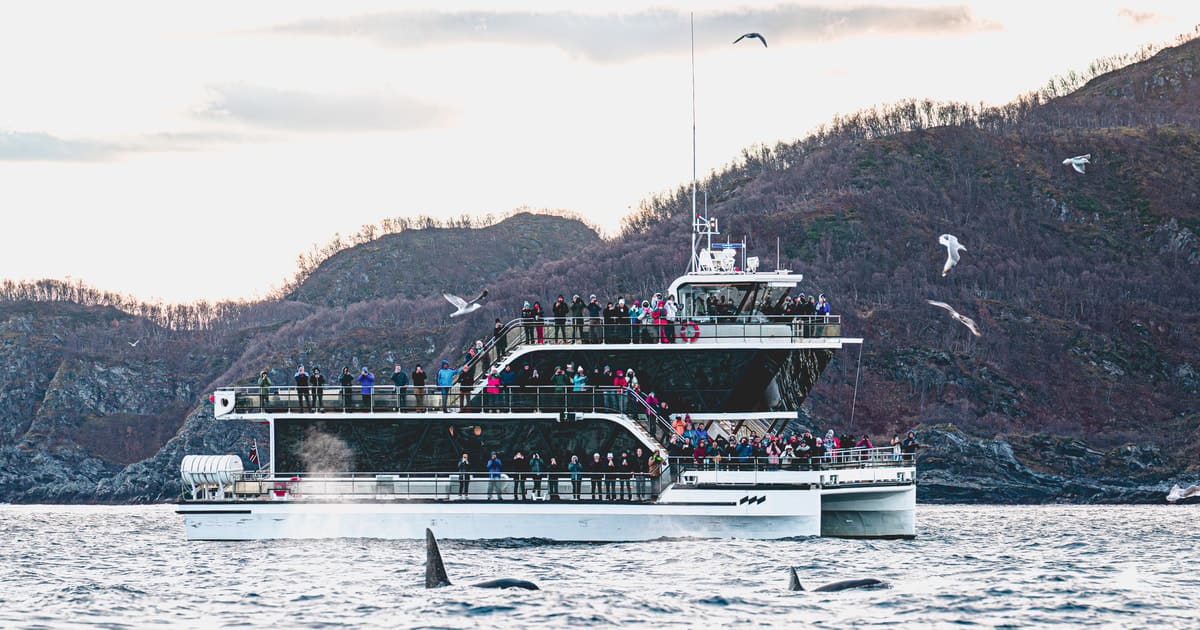
Choose a large vessel for shelter and easier movement, a fast catamaran for a balance of transit and indoor space, or a RIB for a small exposed format with stricter physical requirements. Wildlife remains equally unguaranteed on every vessel.
| Format | Best for | Main trade-off |
|---|---|---|
| Large vessel | Indoor space, toilets and mixed-age groups | Long day and many passengers |
| Fast catamaran | Quicker transit with some shelter | Speed does not eliminate motion |
| RIB | Small group and exposed water-level experience | Cold, motion and strict health limits |
| Road + boat | Reducing the marine transit from Tromsø | Long road day and multiple stages |
Large vessel
The larger format normally offers a heated cabin, toilets and more freedom to change position. It is the first comparison for families, reduced mobility and travellers who prioritise shelter.
It can carry many passengers and still experience substantial sea motion.
Fast catamaran
A fast passenger vessel may shorten transit or spend more time near the search area. Check the exact vessel, indoor seating and boarding arrangement.
Do not assume speed means less seasickness in every condition.
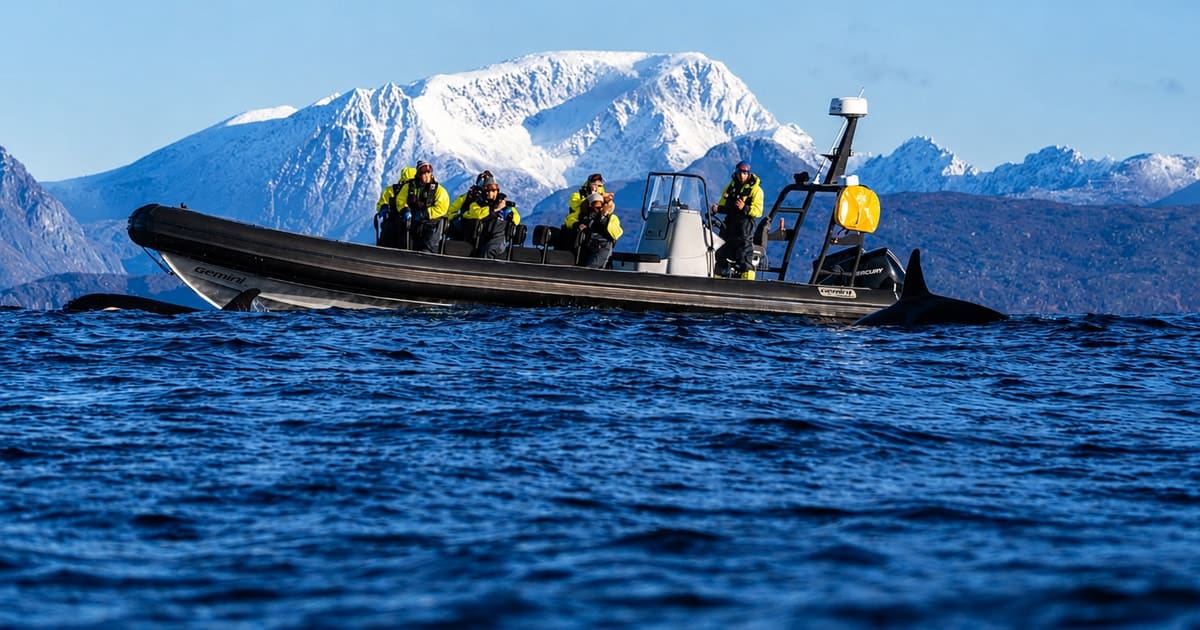
RIB
A rigid inflatable boat creates a small, close-to-water experience and often departs nearer the current feeding area. It is exposed, physically demanding and commonly subject to height, age, pregnancy, back or mobility restrictions.
Choose from the weakest requirement
When a group includes a young child, motion-sensitive traveller or someone needing a toilet and warm shelter, choose from that person’s needs rather than the most dramatic marketing image.
Our planning rule
Choose for the least comfortable person, not the most adventurous. A group enjoys a slightly less intimate view more than a day dominated by cold, fear or seasickness.
- Large vessel: prioritise shelter, toilets and movement space
- Catamaran: compare speed with the operator’s seasickness warning
- RIB: accept exposure and stricter physical limits
Primary sources
Conditions and public information can change. These sources were reviewed on 26 September 2026.
Visit Tromsø: whale watching ↗Visit Tromsø: current FAQ ↗Common questions
FAQ
Which boat is most comfortable?
A larger vessel with a heated indoor area is normally the first comparison, but sea state still matters.
Does a RIB get closer to whales?
Operators must follow wildlife rules; a small boat format does not justify disturbing animals or promise a closer encounter.
Which is best for children?
A larger sheltered vessel is usually easier, subject to the product’s exact age rules.
Which format is fastest?
Fast catamarans and RIBs can reduce transit in some itineraries, but departure location and conditions decide the whole day.
Which whale-watching boat is best for children?
Usually the format with suitable age rules, indoor shelter, toilets and manageable total duration. Vessel size alone is not enough.
Next decision
Compare current whale-watching vessels
Match the boat format to comfort, age and health needs before checking the operator.
Compare options
Rafael builds independent destination guides focused on clear comparisons, verifiable sources and practical booking decisions. Best of Tromsø does not claim first-hand testing unless it is documented.
Editorial policy and author information →