Choose by your priority
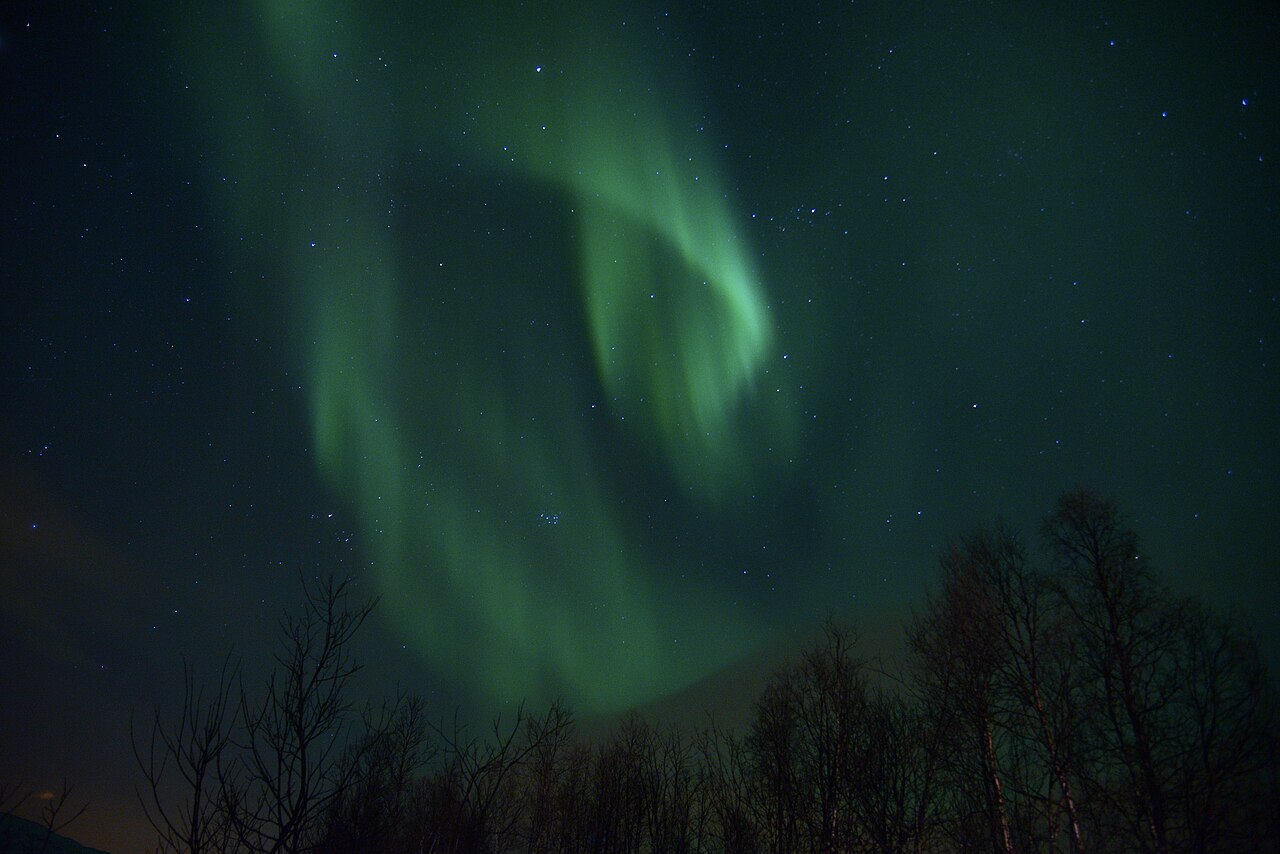
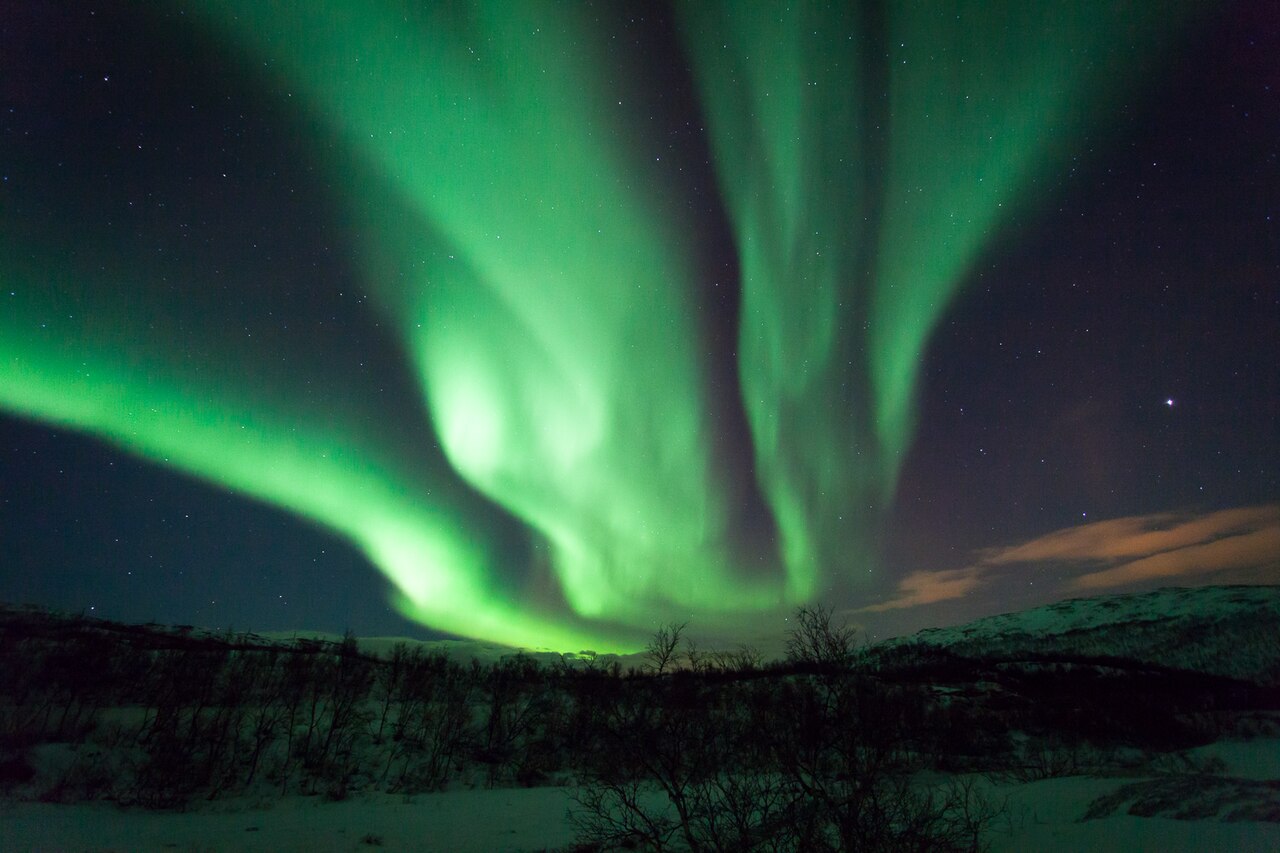
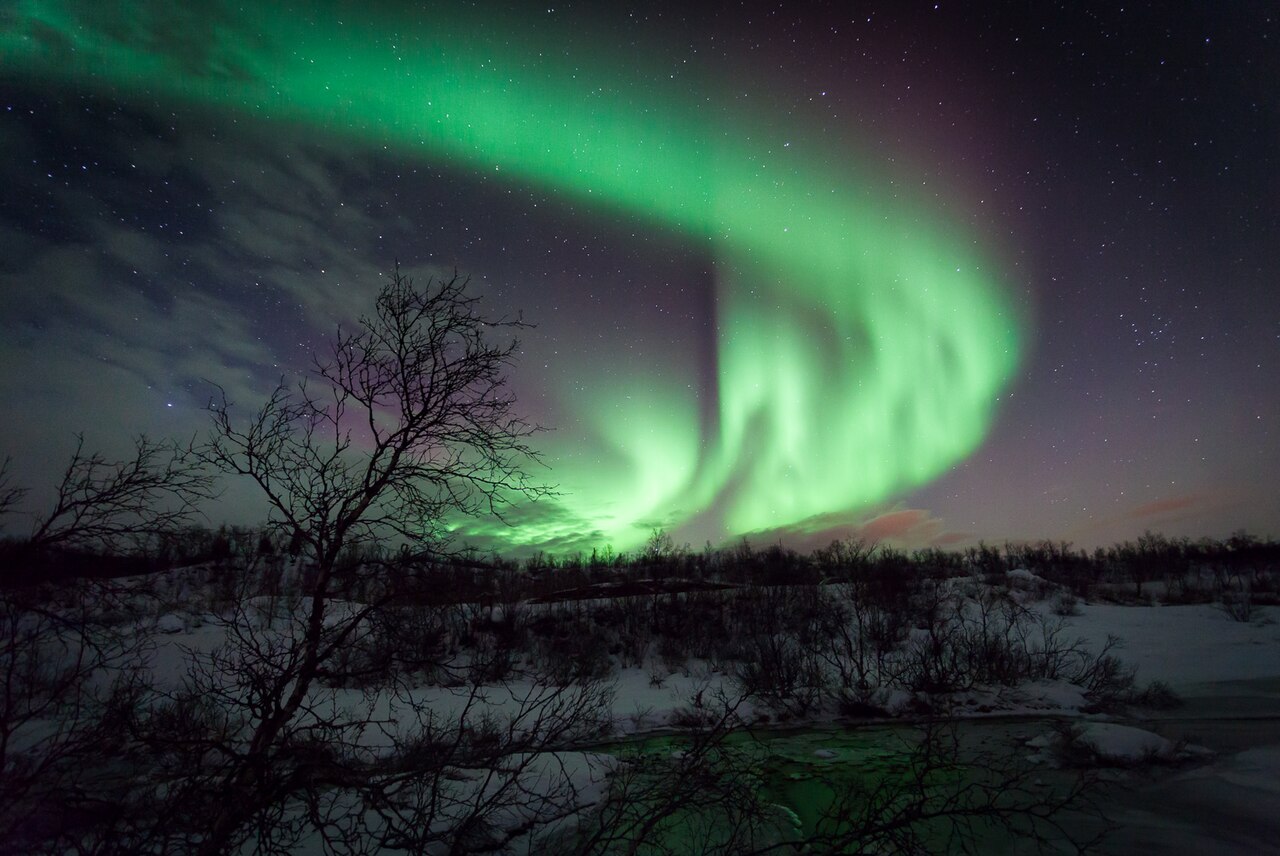
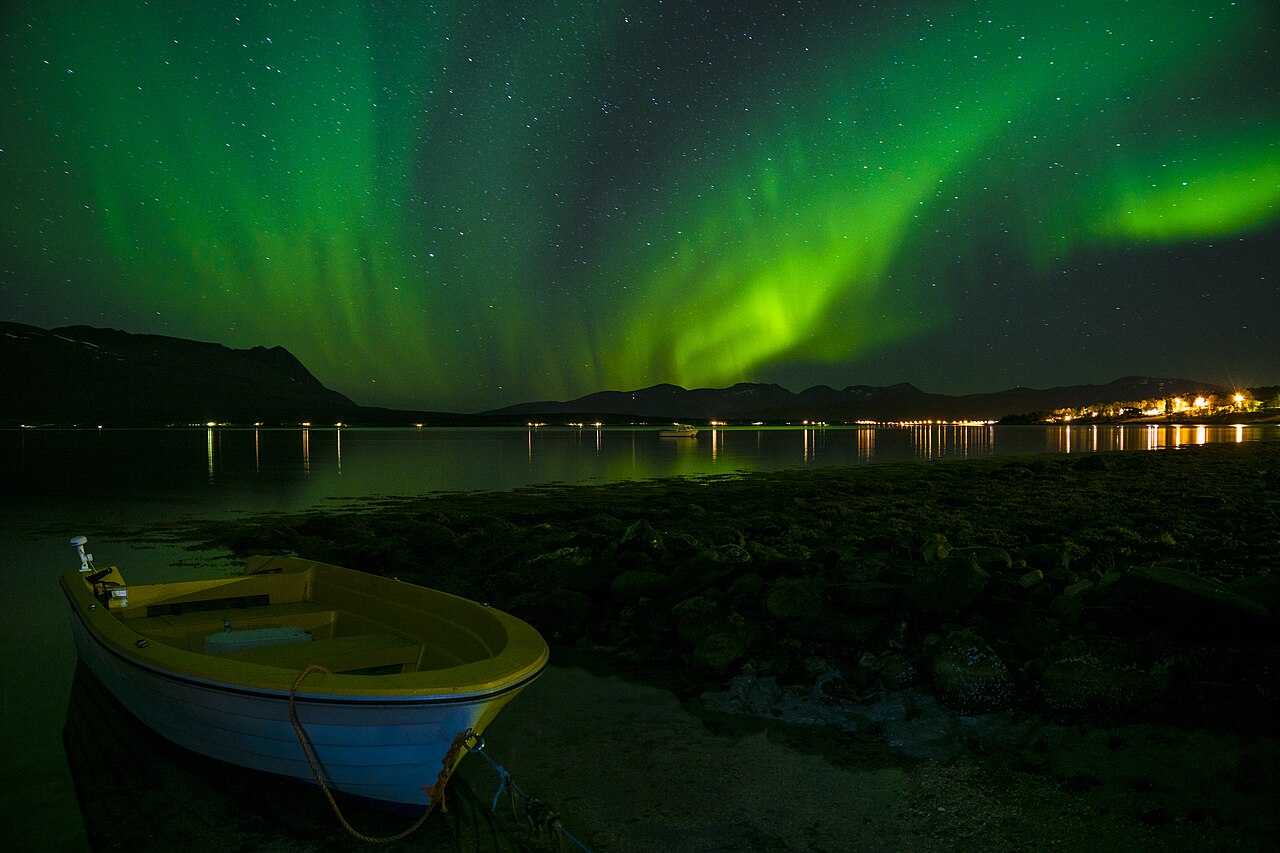
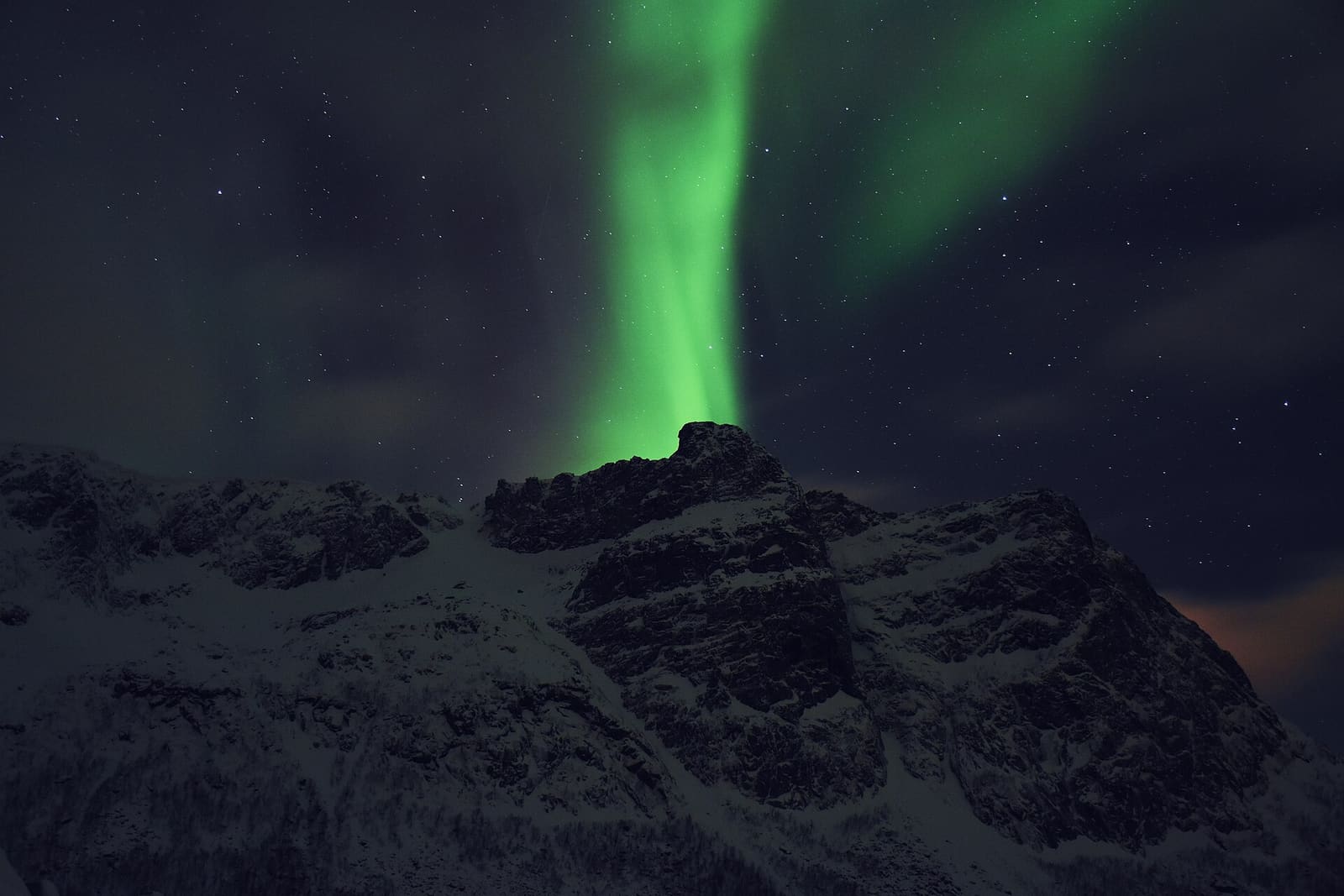
- For northern lights, look for dark evenings from roughly late August into early April.
- Polar Night runs from late November to mid-January, with twilight around midday.
- Confirm the dates and format of any snow-dependent activity before booking flights.
- For the midnight sun, look at roughly 20 May to 22 July.
- February and March offer more daylight for a first winter trip than December.
Tromsø month by month: which month suits your trip?
| Month | Best for | What to keep in mind |
|---|---|---|
| January | Polar Night early on, aurora and winter activities | Daylight returns during the month; check whale departures |
| February | Snow activities with more daylight | Confirm snow conditions and tour dates |
| March | Longer days and dark aurora evenings | Snow activity end dates vary |
| April | Spring light and the last dark evenings | Aurora darkness and snow tours taper off |
| May | Long days; midnight sun starts late in the month | Some trails can still hold snow |
| June | Midnight sun, fjords and outdoor time | No dark sky for aurora |
| July | Midnight sun, fjords and hiking | Midnight sun ends around 22 July |
| August | Hiking and gradually darker nights | Aurora viewing needs late-month darkness |
| September | Autumn scenery and aurora nights | Do not rely on snow activities |
| October | Dark aurora nights and autumn landscapes | Snow activity dates are uncertain |
| November | Aurora and the start of Polar Night | Whale and snow tour dates vary |
| December | Polar Night, aurora and winter atmosphere | Plan scenery around midday twilight |
Start with the activity you would least want to miss
There is no single month for long sunny days, deep snow, whales and northern lights together. Choose the one experience that would make the trip for you, then look at its realistic season. Let the others be welcome possibilities rather than promises.
Already have fixed dates? Work the other way around. Check what is actually operating during your week before you pay for a snow, wildlife or boat outing.
September and October: aurora without full winter
These months bring dark evenings back while leaving useful daylight for walks, the city and fjord scenery. They can suit you if the northern lights matter more than a snowy landscape.
Do not count on early-season snow. If dog sledding is on your list, check whether the option for your date is a snow sled, a wheeled ride or a kennel visit before booking.
November to January: Polar Night and short days
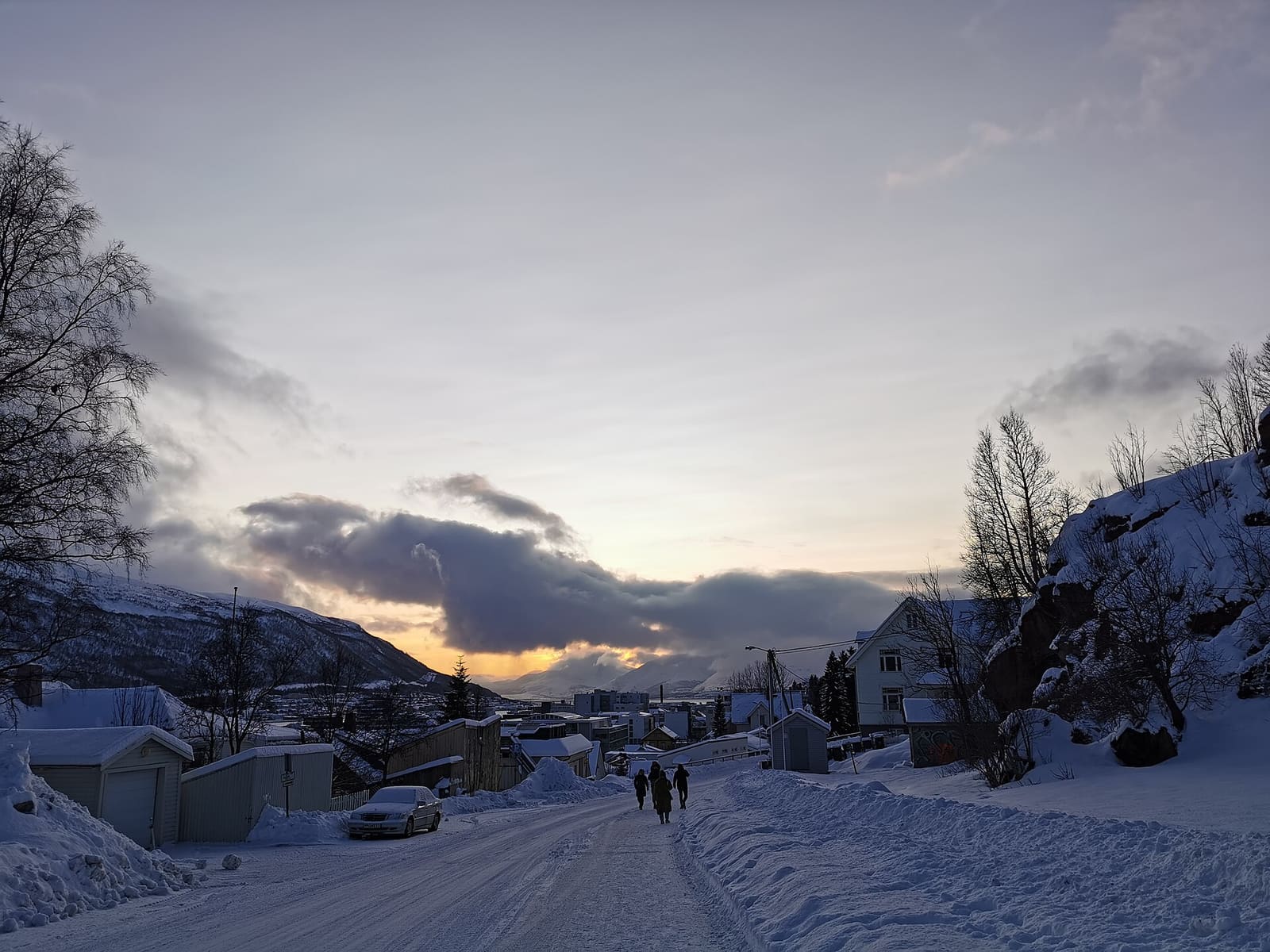
The sun stays below the horizon during Polar Night, but the city is not black all day. Blue or pink twilight can brighten midday. Put the scenery you most want to see into that limited window.
November snow tours may start at different times. Whale outings can also overlap with winter, but feeding areas and departures change. Check current dates rather than relying on last year’s calendar.
February and March: snow with more daylight
If this is your first winter visit, these months give you a useful balance: more daylight for the landscape, possible snow activities and dark evenings for an aurora attempt.
Neither month guarantees a clear sky or a particular trail. If experiencing Polar Night itself is the priority, December or early January is the more appropriate window.
When should you go for the northern lights?
Darkness usually returns around late August and continues into early April. You also need breaks in cloud and auroral activity, so choosing the right month cannot guarantee a sighting on one particular night.
Give yourself several evenings if the aurora is the reason for your trip. Then decide whether a mobile chase, fixed camp or cruise is the kind of night you would enjoy even if the sky stays quiet.
Whale watching and snow tours need separate checks
Whale watching near Tromsø depends on where herring and whales move. The season and departure area can shift, so look at the current sailing before making a whale day the centre of the trip.
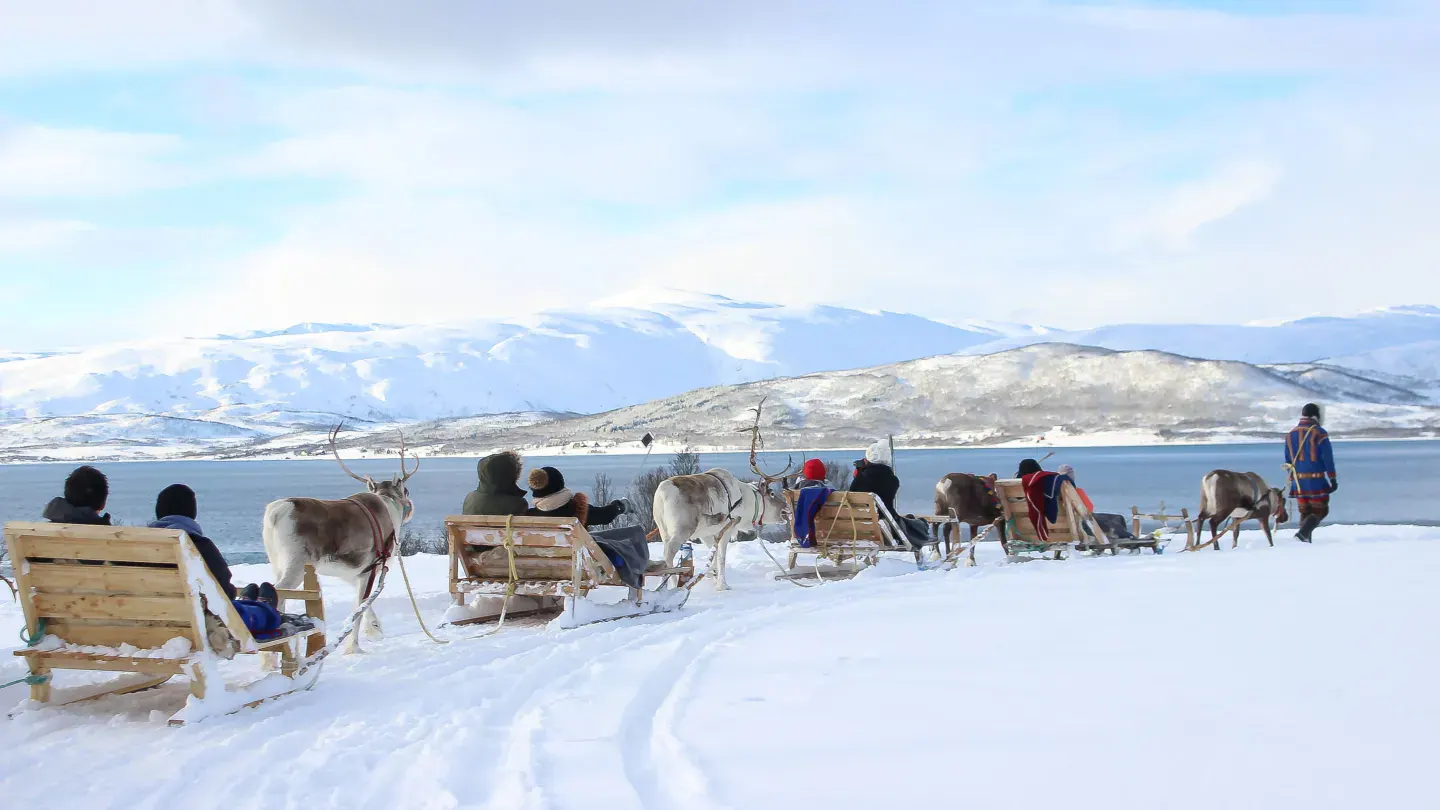
Dog sledding, snowmobiling and other snow activities need suitable conditions. A broad “winter” label does not tell you whether a particular early or late date will run in the format you want.
Late May to July: choose the midnight sun
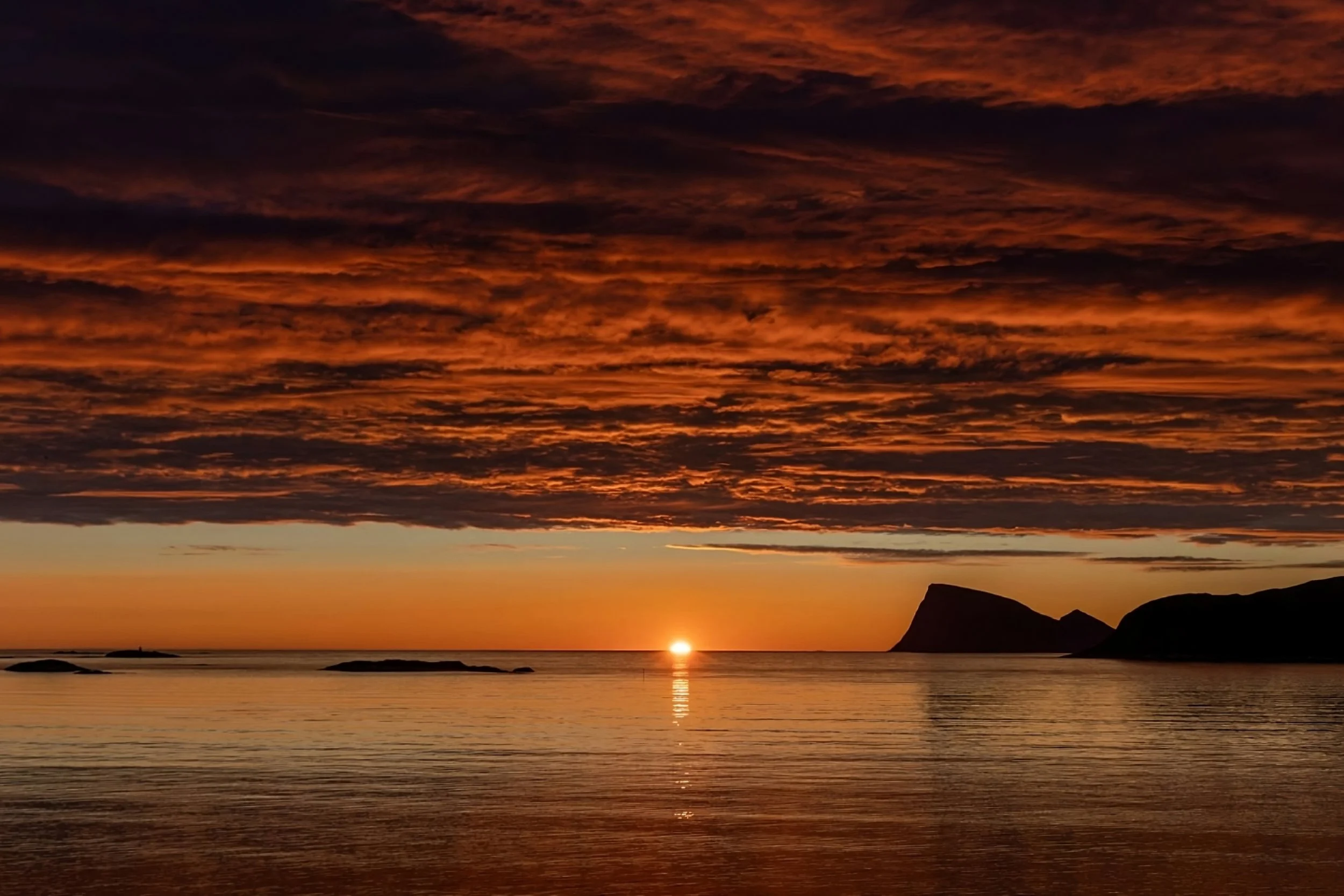
From about 20 May to 22 July, the sun stays above the horizon. A late coastal walk or boat trip can become part of an ordinary evening, though cloud may hide the sun itself.
Choose summer for fjords, hiking and long days. The bright sky rules out visible northern lights around the midnight-sun period, and an eye mask may help if the light interrupts your sleep.
Relevant activities
An outing for the season you choose
These are alternatives for different trips: an aurora attempt on a dark night or a coastal road trip during the summer light.
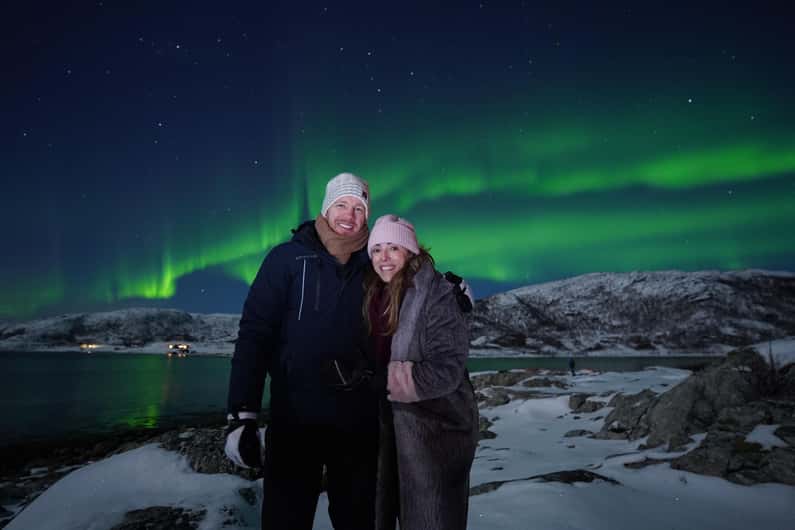 For dark eveningsLong-range small-group northern lights chaseA mobile aurora chase for autumn or winter dates; a sighting is never guaranteed.From €152 per personCheck availability ↗︎
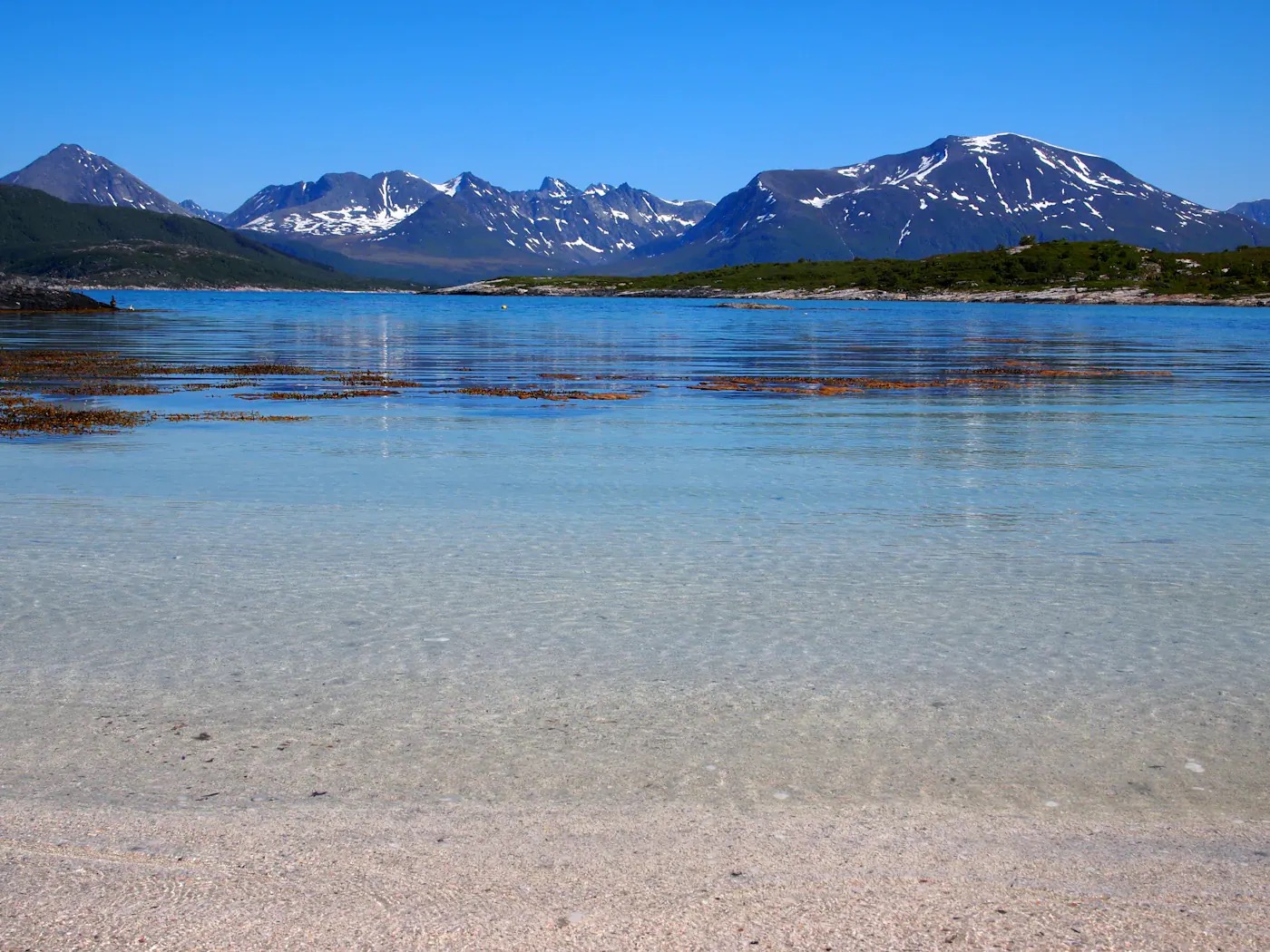 For summer eveningsSmall-group Sommarøy midnight sun tourA small-group drive towards Sommarøy when the long summer light is the reason for your trip.From €119 per personCheck availability ↗︎
Before you book the flights
Check daylight for your exact dates and confirm the one tour you most want. Early and late weeks in the same month can feel different. Leave several evenings for an aurora attempt and a weather alternative for anything on snow or water.
- Pick one non-negotiable activity.
- Check its exact operating dates and format.
- Leave several evenings for aurora if it matters.
- Keep a weather alternative for sea or snow activities.
Our planning rule
The best month is the one that protects the activity you would most regret missing. Start with that non-negotiable, then accept the trade-off it creates in daylight, snow, wildlife or price.
- Choose November to January only if whales and very short winter light matter more than certainty about every snow activity
- Choose February or March for a stronger daylight-and-snow balance
- Choose late spring or summer for outdoor access rather than aurora darkness
Primary sources
Conditions and public information can change. These sources were reviewed on 16 October 2026.
Visit Tromsø: seasonal overview ↗︎Visit Tromsø: northern lights timing ↗︎Visit Tromsø: midnight sun dates ↗︎Visit Tromsø: whale-watching season ↗︎Time and Date: Tromsø sun and twilight ↗︎Common questions
FAQ
What is the best month to visit Tromsø?
For a first winter trip, February or March often balances snow activities, daylight and dark evenings. Choose December for Polar Night or June and July for the midnight sun instead.
When is the best time to see northern lights in Tromsø?
Dark nights are normally available from around late August into early April. A sighting still depends on cloud and auroral activity, so plan several possible evenings.
Is Tromsø completely dark during Polar Night?
No. The sun does not rise, but twilight can brighten the sky around midday. The amount of useful light changes across the season.
When is the midnight sun in Tromsø?
The usual period is about 20 May to 22 July. Exact daylight changes by date; check a current sun table for your trip.
Can I see whales, deep snow and northern lights in the same month?
They can overlap in parts of winter, but not reliably on every date. Whale movements, snowfall and cloud vary, so prioritise the experience you would least want to miss.
Is March still a good time to visit Tromsø?
Yes if you want more daylight with possible snow activities and dark evenings. Check your chosen operator’s season and the exact daylight for your dates.
Next decision
Find activities for your month
Once you have a month in mind, check the activities actually running that week and leave room for weather changes.
Compare options