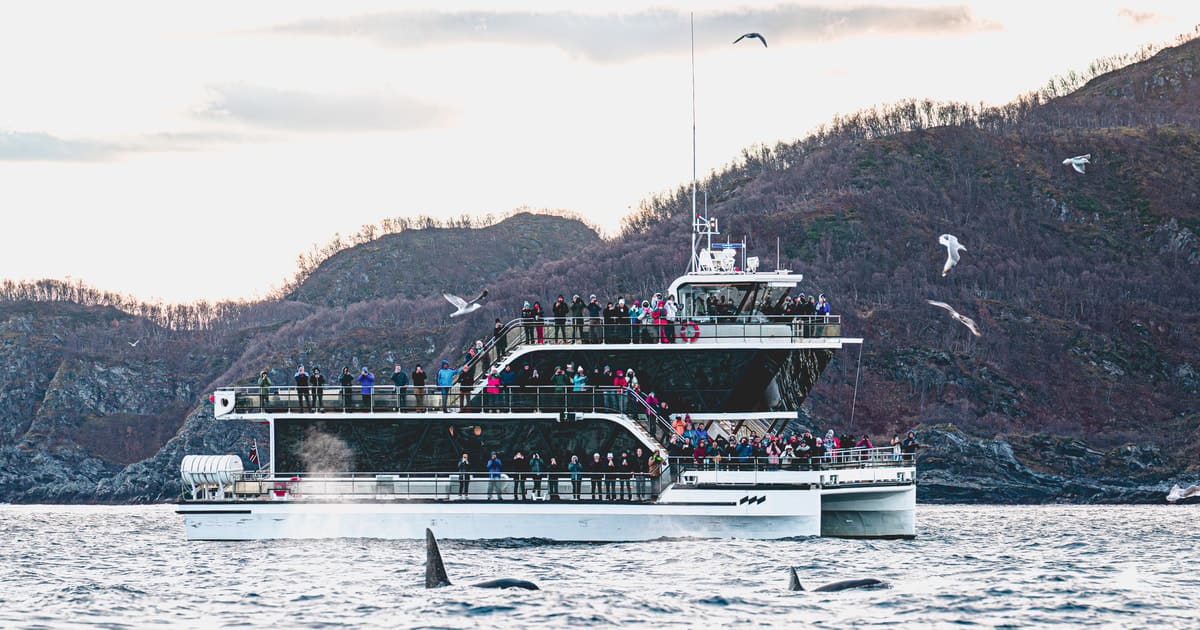
The short answer
- The usual season is November to January, but check this year’s departures.
- The feeding area may be far from Tromsø; allow for the full journey.
- Choose the vessel with the least sea-confident person in mind.
- Wind or sea state can change or cancel the plan.
- A whale sighting is never guaranteed; leave another day free if this is a priority.
| Planning factor | What it changes | What to check |
|---|---|---|
| Season | Whether departures operate | Current dates for your travel week |
| Feeding area | Distance from Tromsø | Departure point and complete journey |
| Sea conditions | Comfort and route | Forecast and operator updates |
| Wildlife movement | Chance of a sighting | Written no-sighting terms |
When is whale-watching season in Tromsø?
November to January is the usual planning window. Orcas and humpbacks follow herring, so the timing and feeding area change rather than opening neatly on one fixed date. Check live operating dates before buying flights mainly for a whale trip.
At the edge of the season, treat the outing as a possibility, not the foundation of the whole holiday. The month-by-month guide can help you choose other activities you would still enjoy if no suitable sailing runs.
Why does a Tromsø whale tour take so long?
The whales may be feeding far north of Tromsø. Some outings sail a long distance; others use a road transfer before you board closer to the search area. Either way, time watching animals is only one part of the booking.
Compare check-in, departure and return, not just the headline boat time. A seven- to nine-hour outing takes most of a short winter day. Avoid squeezing another demanding plan straight after it.
How the vessel affects a winter day
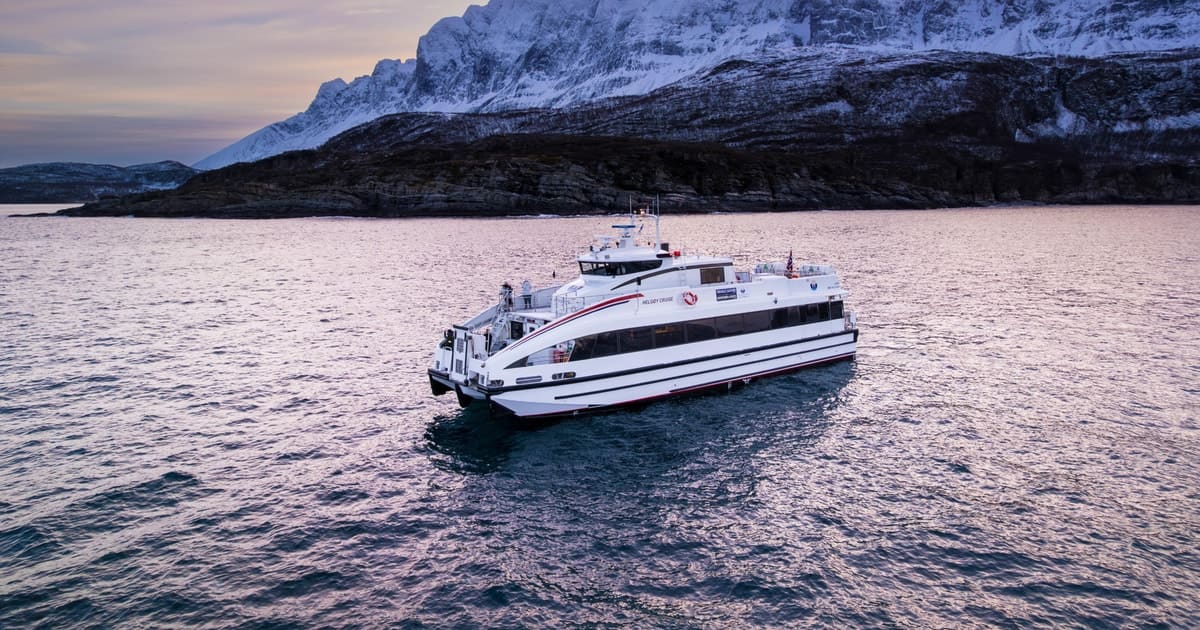
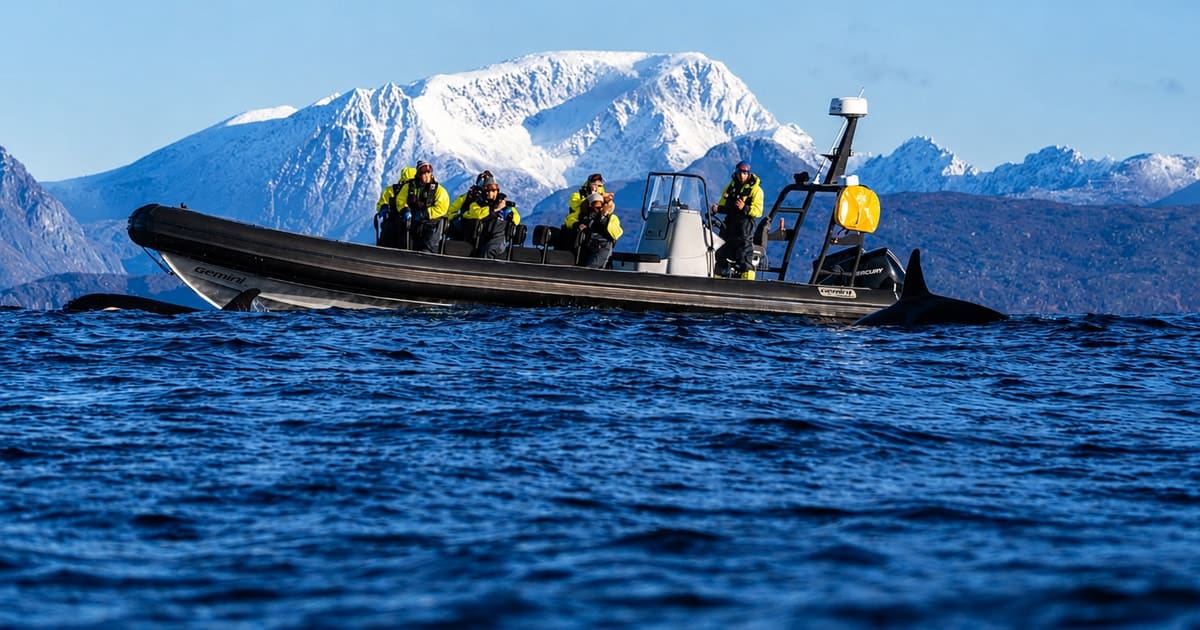
Indoor space and toilets can make a long journey easier, though every vessel still moves with the sea. An open RIB brings more wind, spray and physical demands than a sheltered boat.
If anyone has mobility or health concerns, check the age, height, pregnancy and other restrictions first. The boat-types guide explains the formats; the current tour shortlist is where you can compare the actual departures and terms.
Will you actually see whales?
No operator controls where wild whales travel. A crew can use recent information to search, but the animals may move and marine weather may change the route or stop the sailing.
If this is your main reason to visit, leave another possible day. Read the cancellation and wildlife terms too: a day without a sighting does not automatically bring a refund.
What if you get seasick or cold?
A larger vessel usually offers more shelter than an open RIB, but it will still move. If seasickness is a concern, choose conservatively and ask a qualified health professional about medication rather than relying on another traveller’s dosage.
Wear warm layers and waterproof outerwear if you want time on deck. A heated saloon helps during transit; it does not replace outdoor clothing. For step-free access, ask about the actual vessel and quay before booking.
What to check once your dates are fixed
Look for an operator that explains its approach to wildlife and safety. A good day is about observing animals, not chasing a photograph at any cost. The boat and its facilities should work for everyone travelling with you.
Then check the current departure point, total duration, indoor facilities, restrictions and cancellation terms. Compare current whale-watching tours only after you know what kind of day your group can comfortably manage.
Primary sources
Conditions and public information can change. These sources were reviewed on 10 October 2026.
Visit Norway: winter in Tromsø ↗︎GetYourGuide: hybrid-electric whale tour ↗︎GetYourGuide: whale-watching catamaran ↗︎Common questions
FAQ
What month is best for whale watching in Tromsø?
November, December and January usually make up the main season, but sightings and operating dates depend on herring movements and weather.
Can you see orcas from Tromsø?
Orcas may be seen on winter tours that travel towards current feeding areas. Seeing them on a particular departure is never guaranteed.
How long is a whale-watching trip from Tromsø?
Many current outings use most of a day, often around seven to nine hours. Compare the total duration and any road transfer, not only the boat segment.
What if the sea is rough on my whale-watching date?
The operator may change or cancel a departure for marine conditions. Keep a flexible day and read the selected tour’s weather and cancellation terms.
Can children join a Tromsø whale tour?
Some tours accept children, but age, height and safety rules vary, especially for RIBs. Check the selected departure and make sure the total day suits the child.
Are whale sightings guaranteed?
No. Whales are wild, feeding areas move and weather can interrupt a trip. Read the operator’s cancellation and no-sighting terms before booking.
Next decision
Compare current whale-watching tours
Compare the boats and complete journeys available for your dates, then check each operator’s current restrictions and terms.
Compare options